Where we started
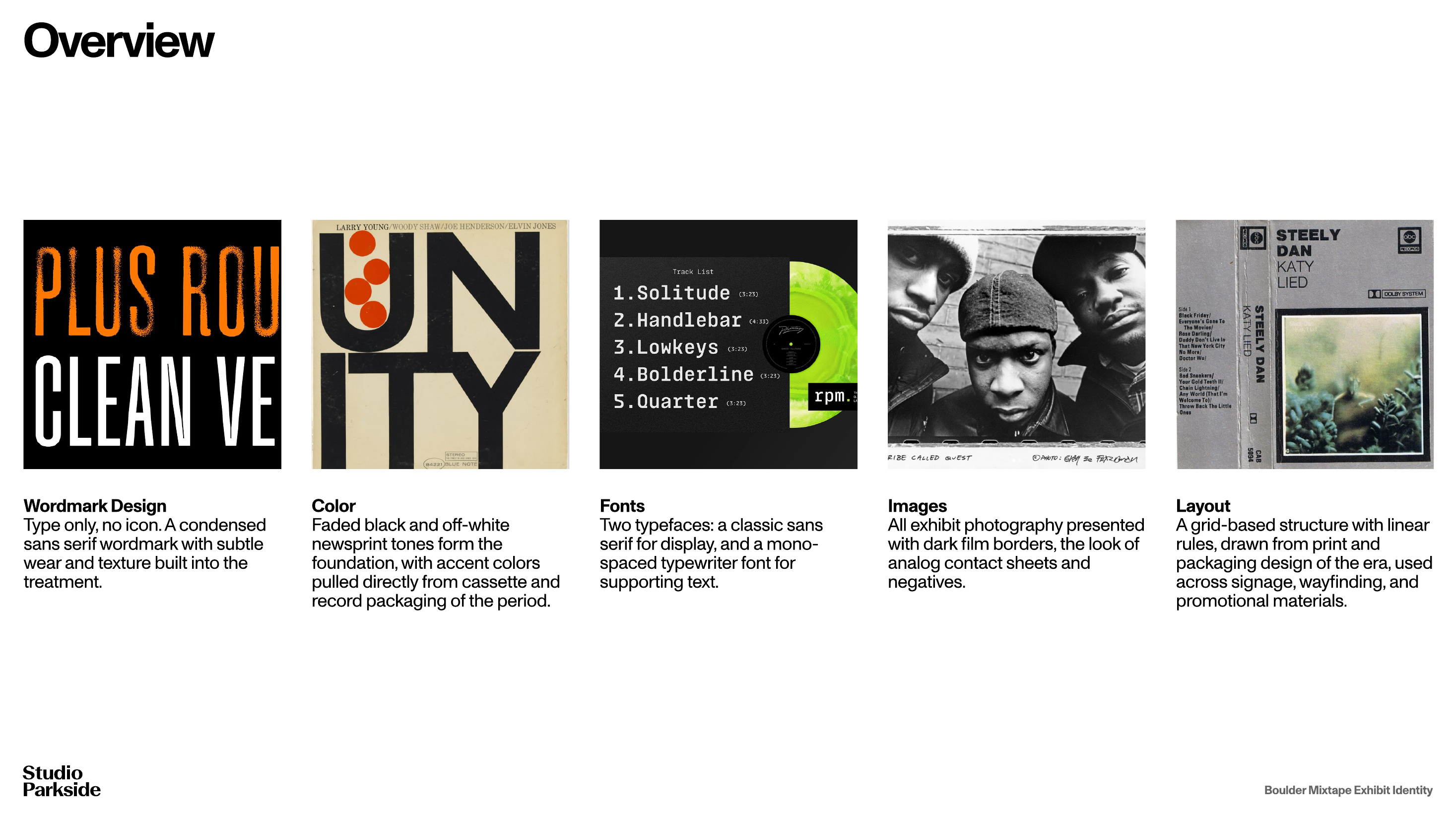
The mood board approved at the start of the project. Five pillars, the wordmark, color, fonts, images, and layout, set the direction for everything that follows.
The objects told us the language
This identity was drawn from the objects Boulder's music scene produced and left behind. Concert flyers, cassette tapes, record sleeves, newspaper ads. The graphic language of the era was already there. The job was to find it and bring it forward.
The wordmark is typographic only. Bold and built from the same visual tradition as the album covers and packaging of the period. It doesn't announce itself as a museum identity. It feels like it belongs alongside the artifacts on display.
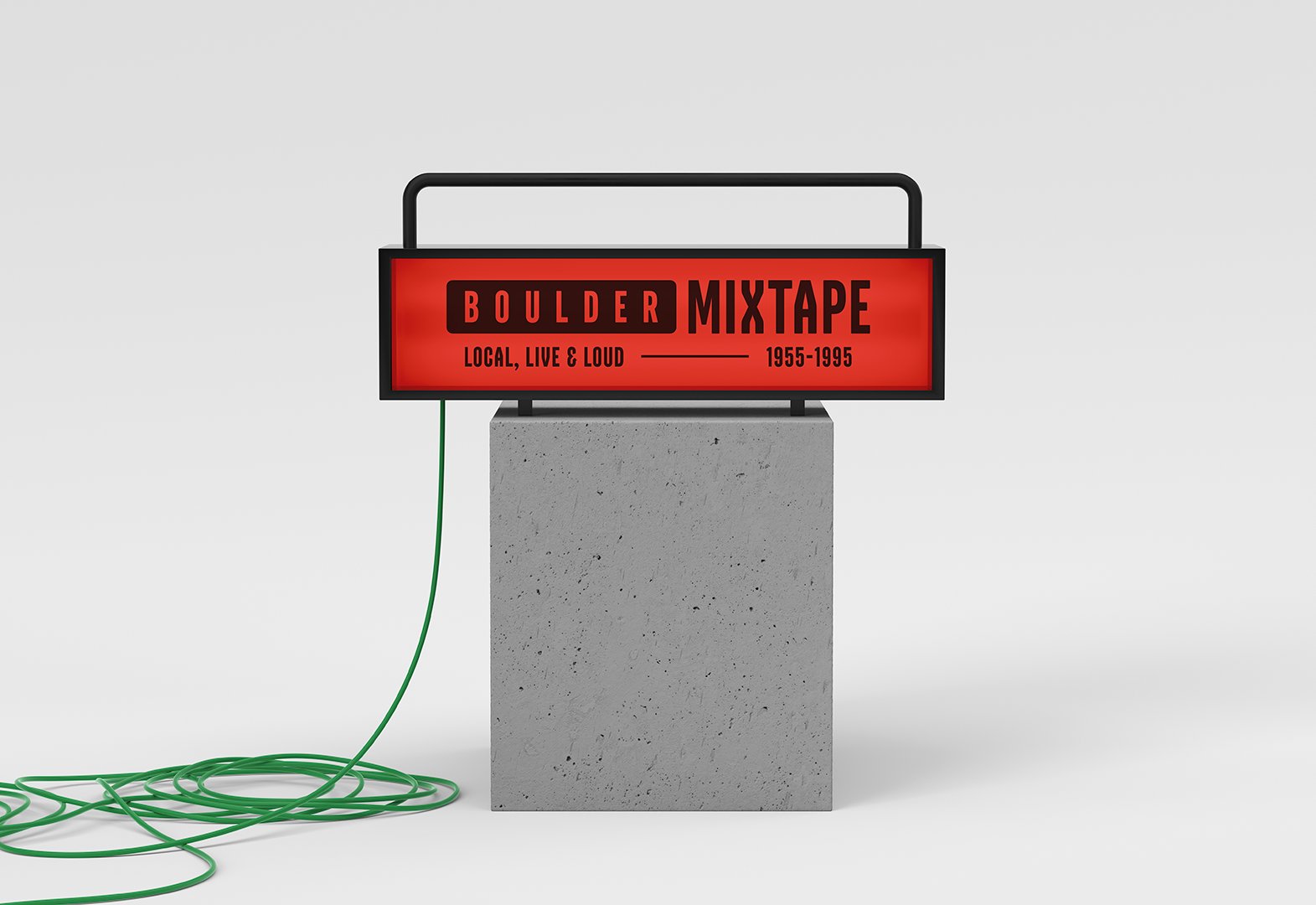
Inside the exhibit, the identity guides. Outside, it communicates. That's the line it holds across every application, from the banners on the street to the panel on the wall to the hat in the gift shop.
 Watch the walkthrough
Type only, no icon
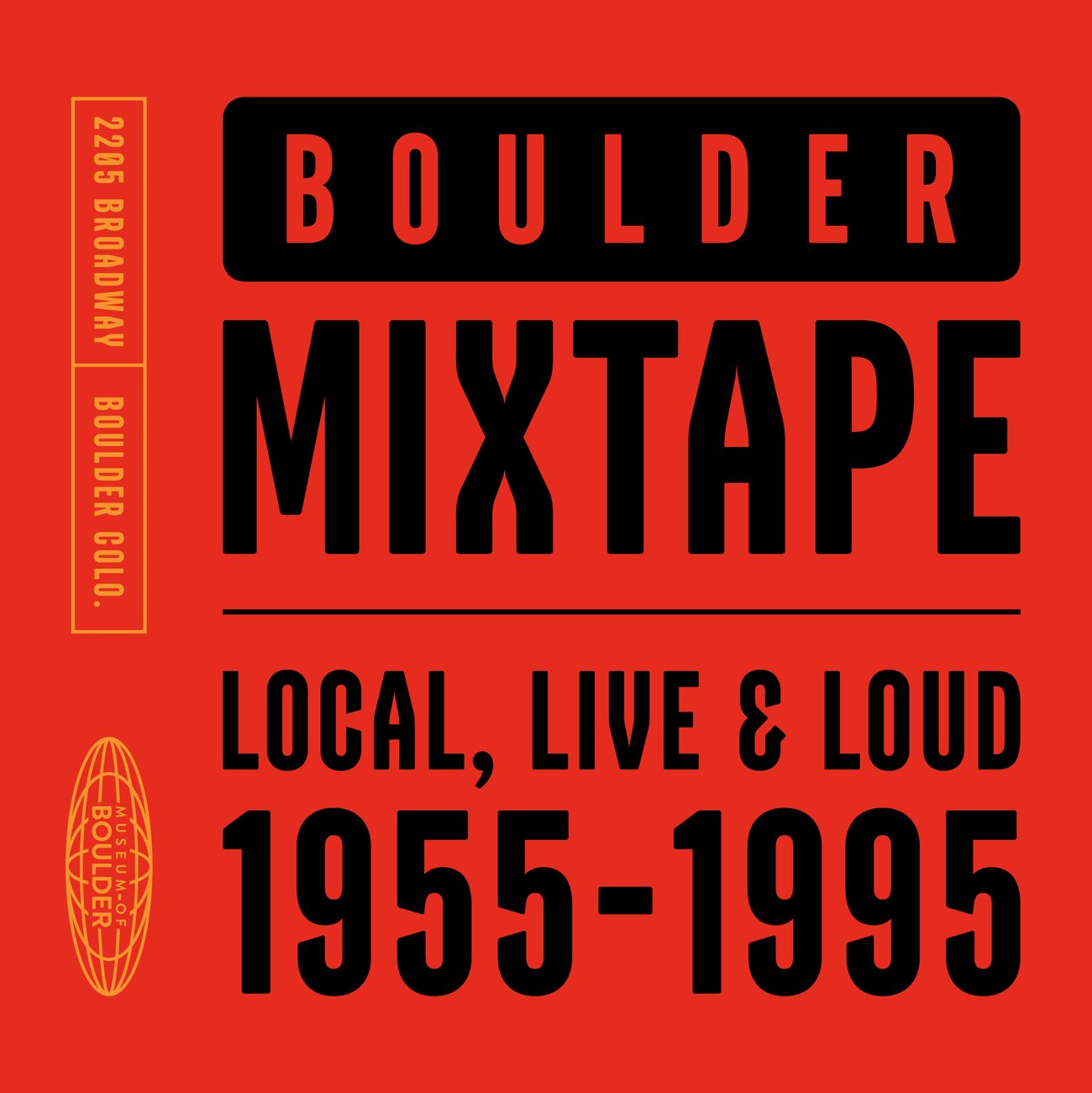
The wordmark is type only. No icon, no supporting graphic. Bold and iconic, reminiscent of the era but built for contemporary viewing without feeling fake-vintage. It reads clearly at any scale, from a two inch pin to a twelve foot banner.
Boulder sits inside a holding shape, like a label stuck on a cassette tape. It's the one structural move in the mark, and it ties the name straight back to the format the exhibit is named for.
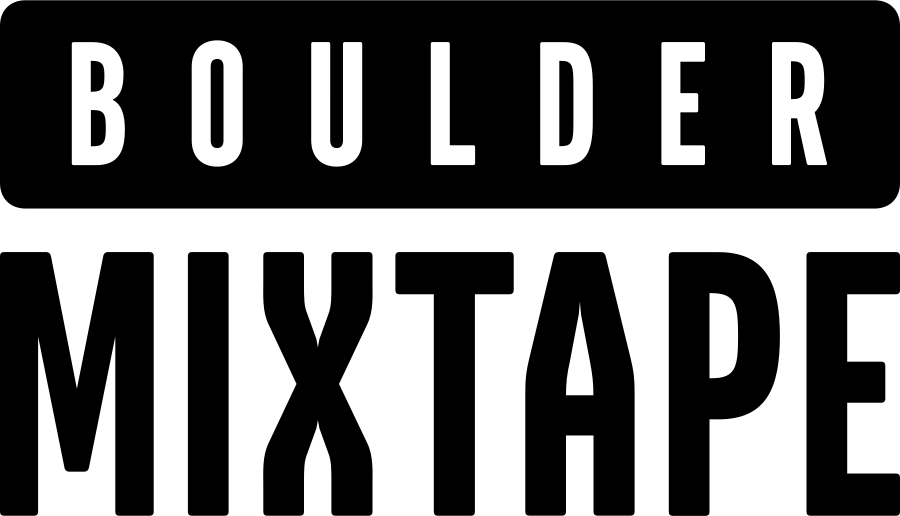 Primary · positivePrimary · reversed
First impression, before the door
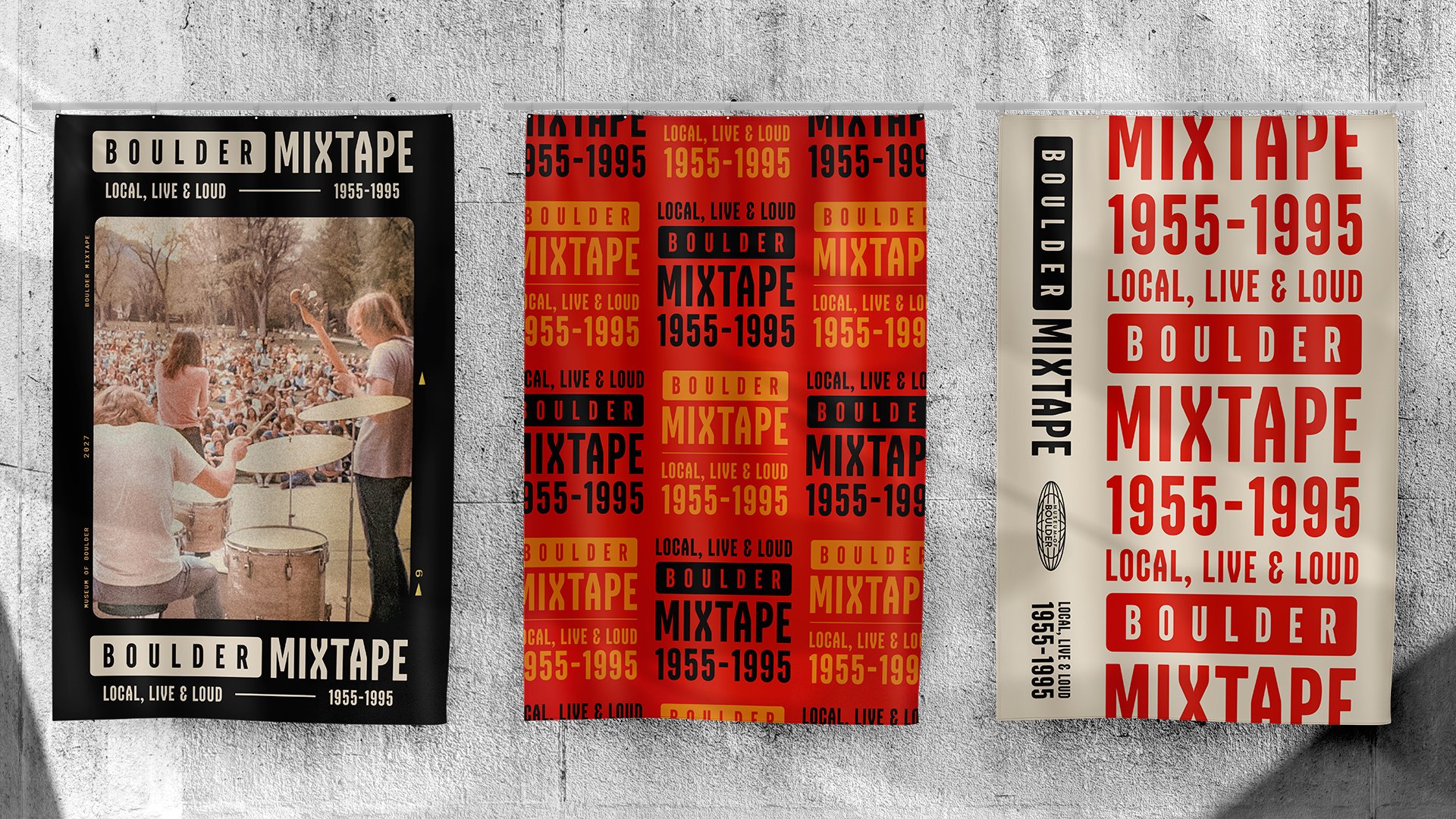
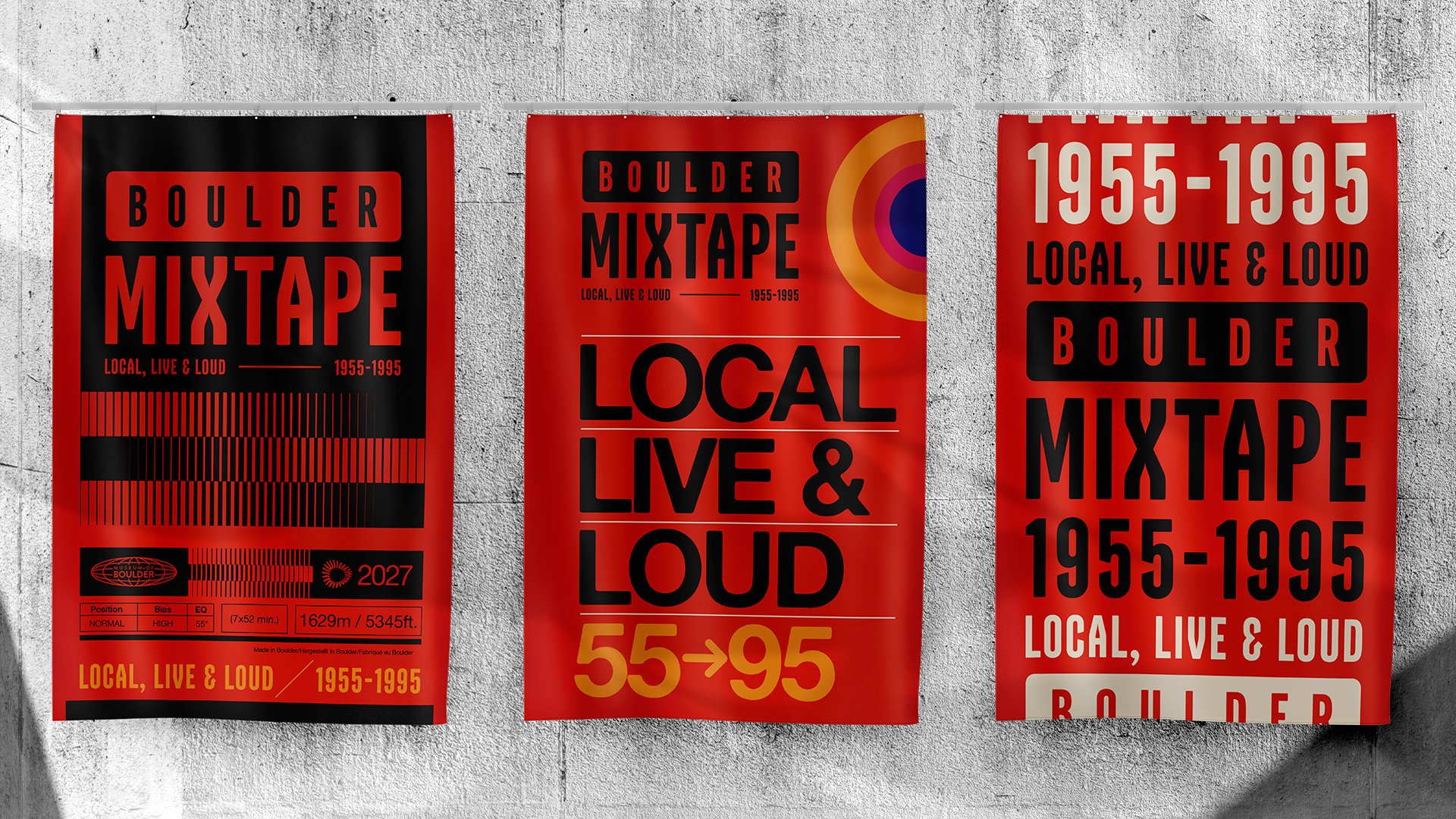
The banners establish the identity before visitors walk in. They come in multiple color treatments that all work together, and the palette can even shift through the year, seasonal or just to draw attention in a new way. The museum can mix and match them as they see fit to best communicate what's happening. A photo gives a preview of what's inside, while the logo-heavy layouts carry strong branding and name recognition.
Setting the stage
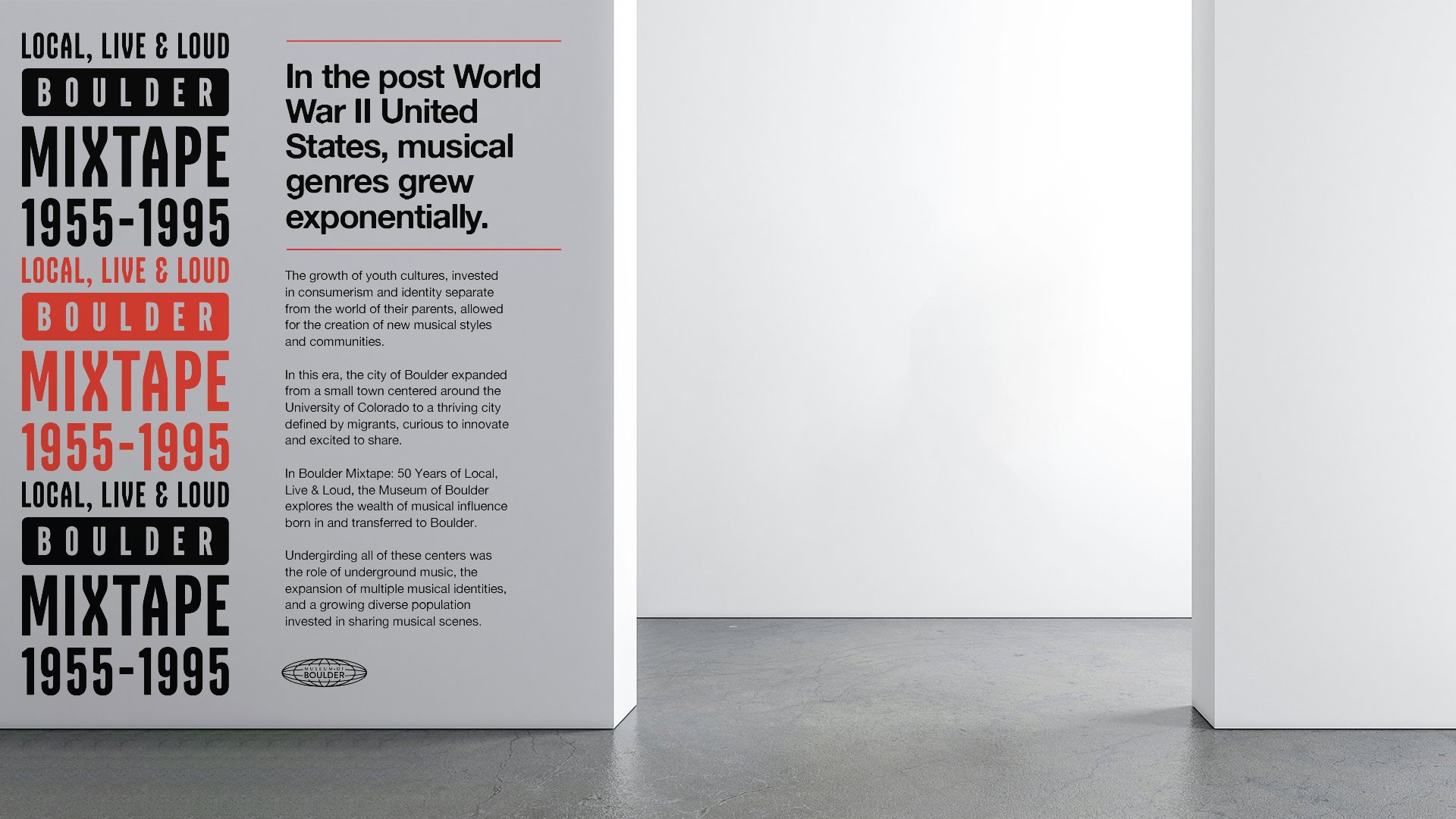
The intro wall panel comes right before you step into the exhibit. It sits inside the museum, past the main entrance, and you walk through the opening, with the transom overhead, to physically enter the show. It carries the wordmark, the tagline, and enough context to orient you, then gets out of the way so the objects can take over.
Transom
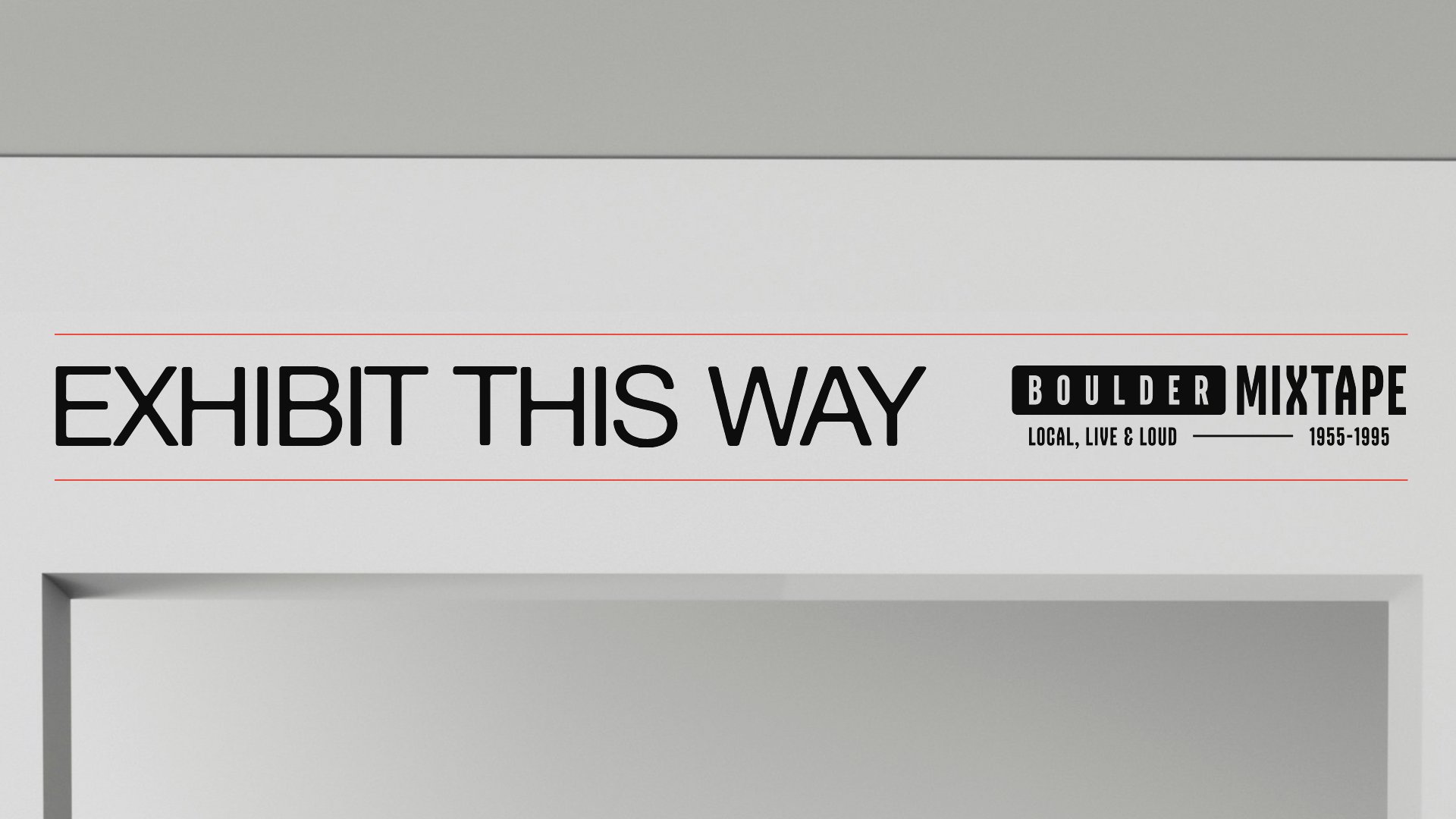
A single continuous read across the opening overhead. The wordmark holds the space without crowding it.
Moving through the exhibit
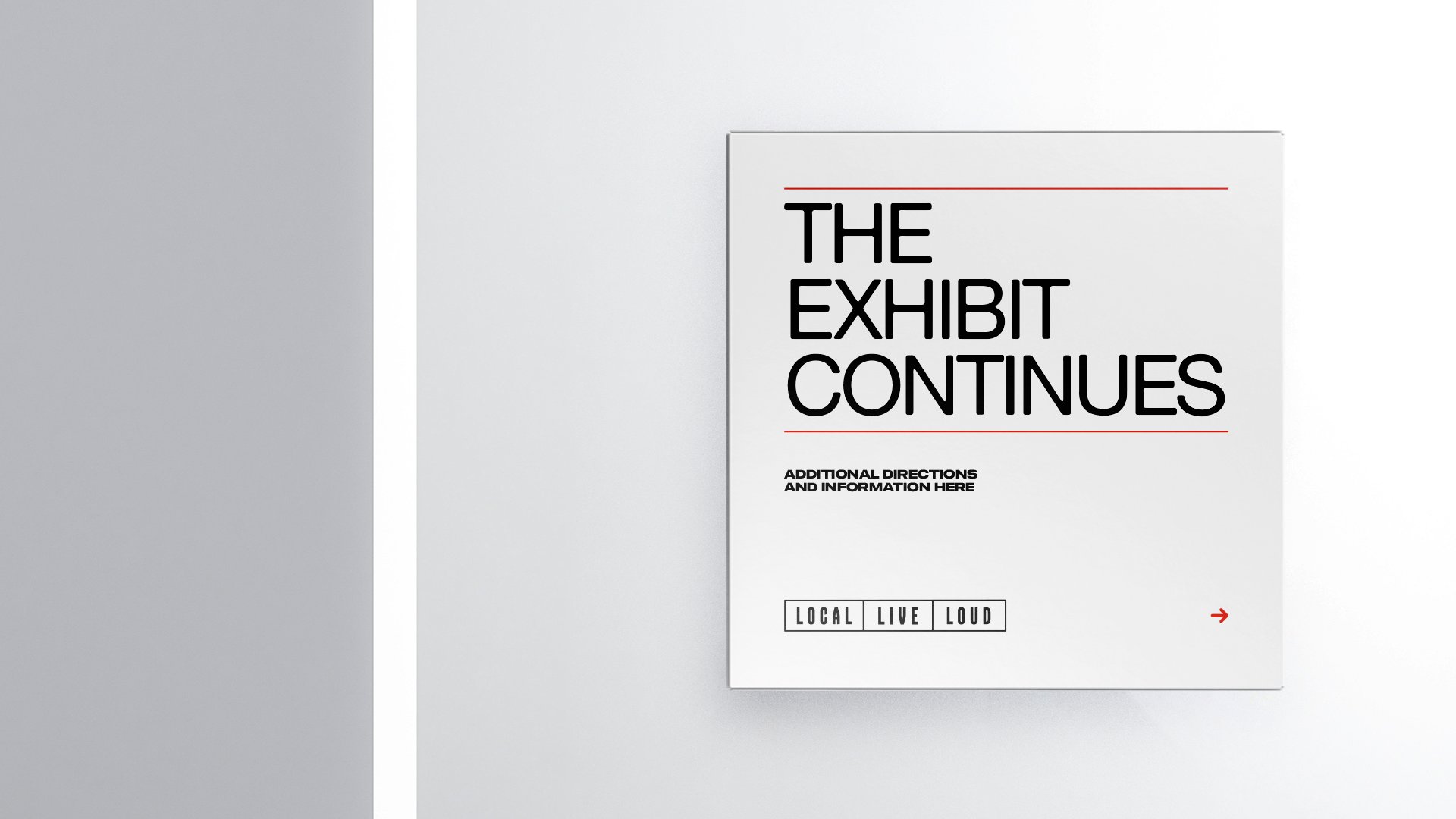
Wayfinding is purely typographic. Large, legible, and spare. The identity does its job and steps aside.
The grid that holds it together
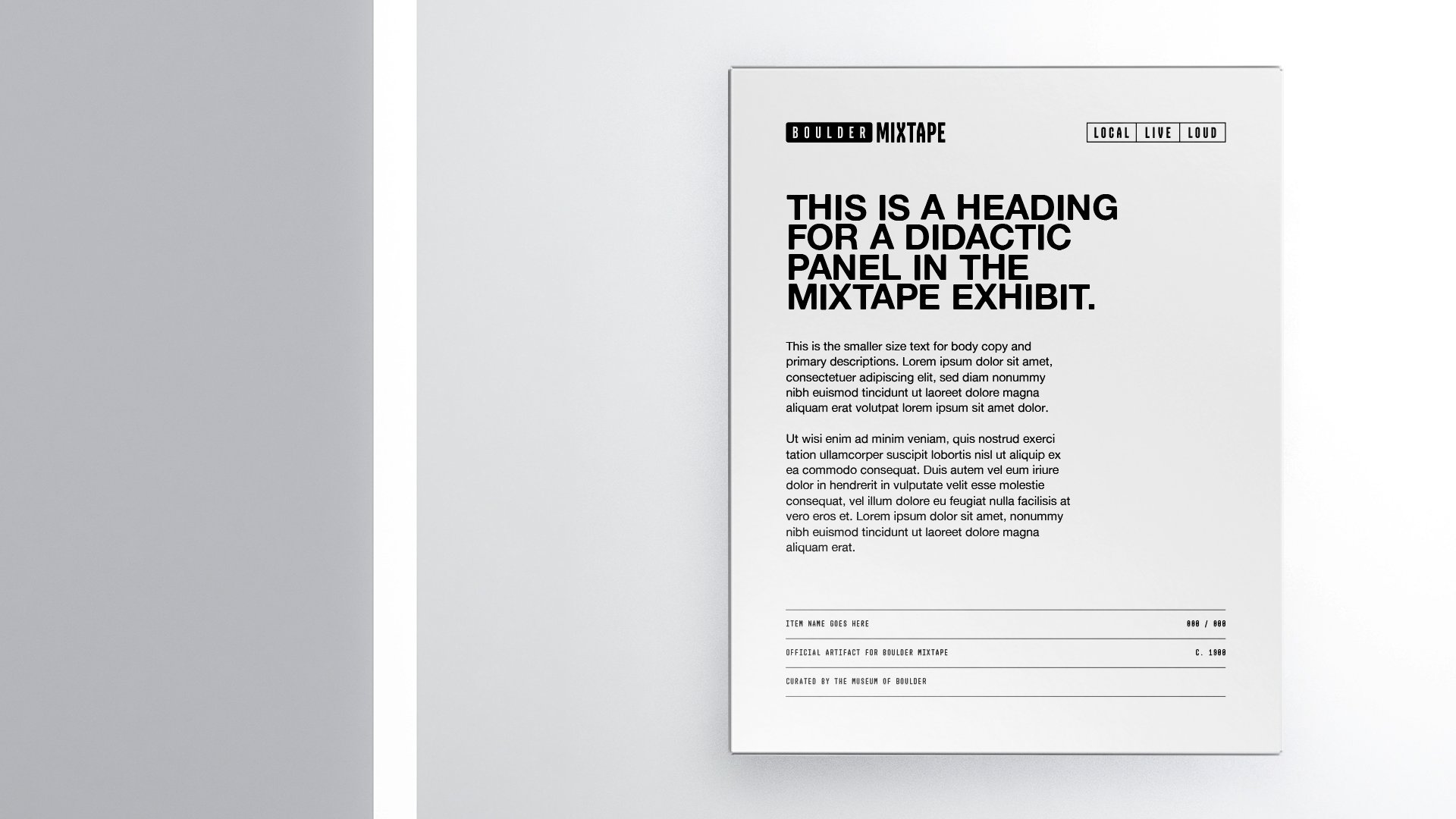
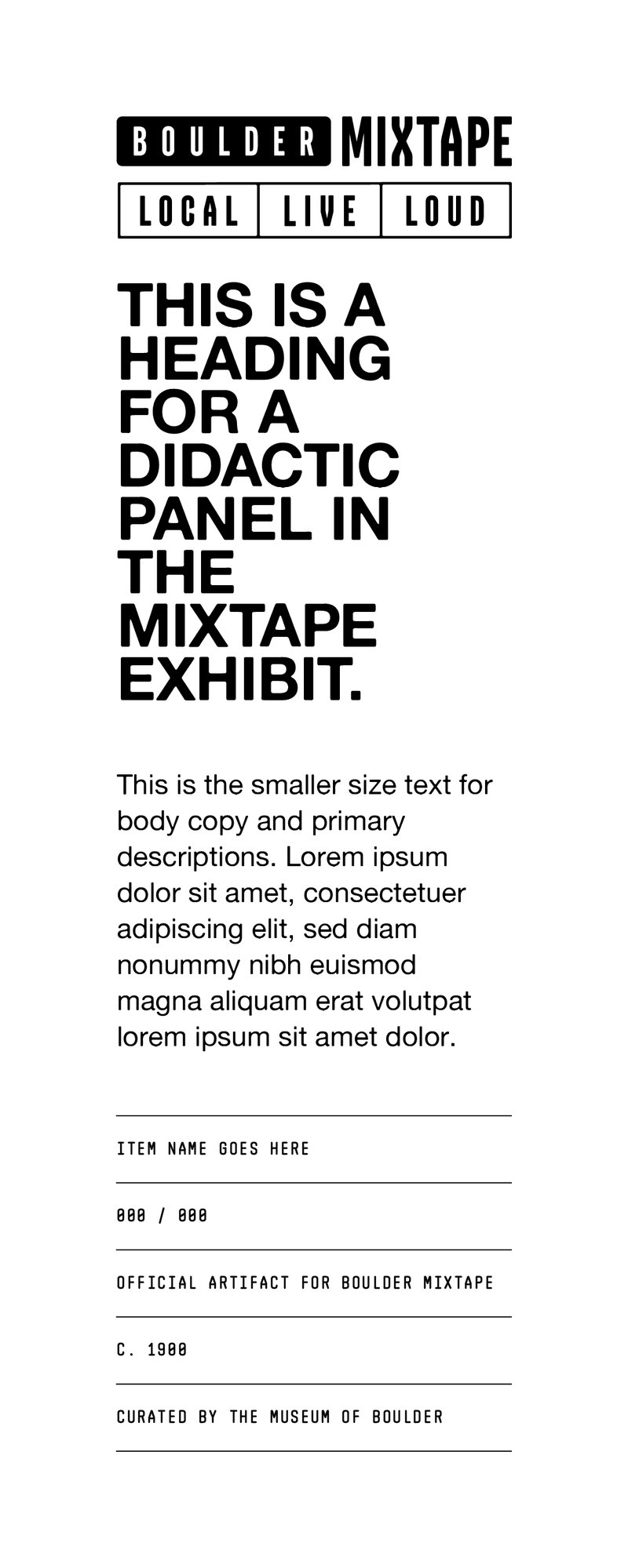
The panels are easy to read and never pull attention from the artifacts, and the presentation plays well in every application.
The details along the bottom are inspired by the information on a cassette tape insert, and they give credence to the work of building the exhibit. There's the official name of the artifact, an overall numbering system that lets someone find the piece they want and speaks to how robust the exhibit is, and a circa date that always points to the time period so a piece is understood in its historical context. That lets the headline stay expressive and the body copy explain, while the panel still carries the detail of what's on display.
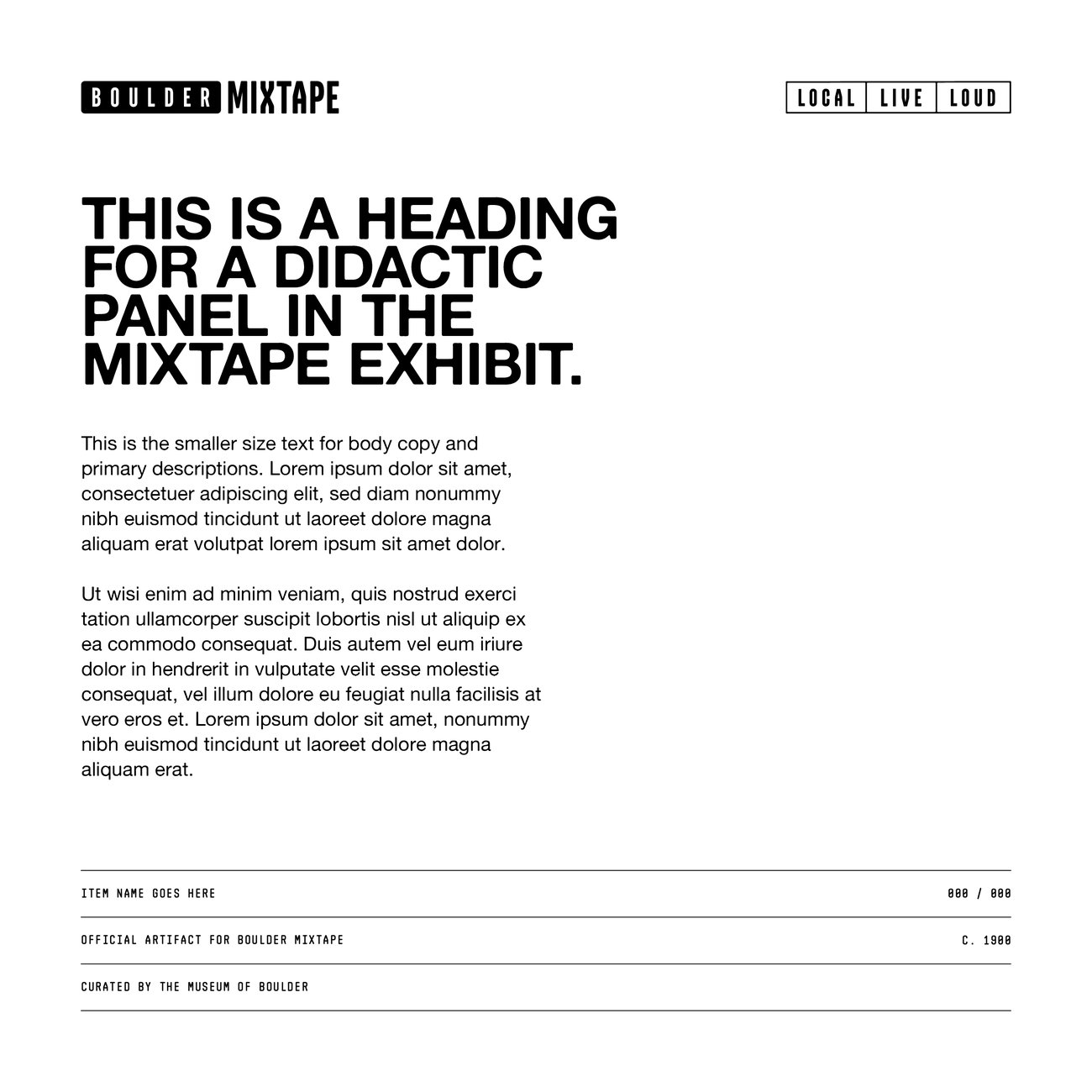
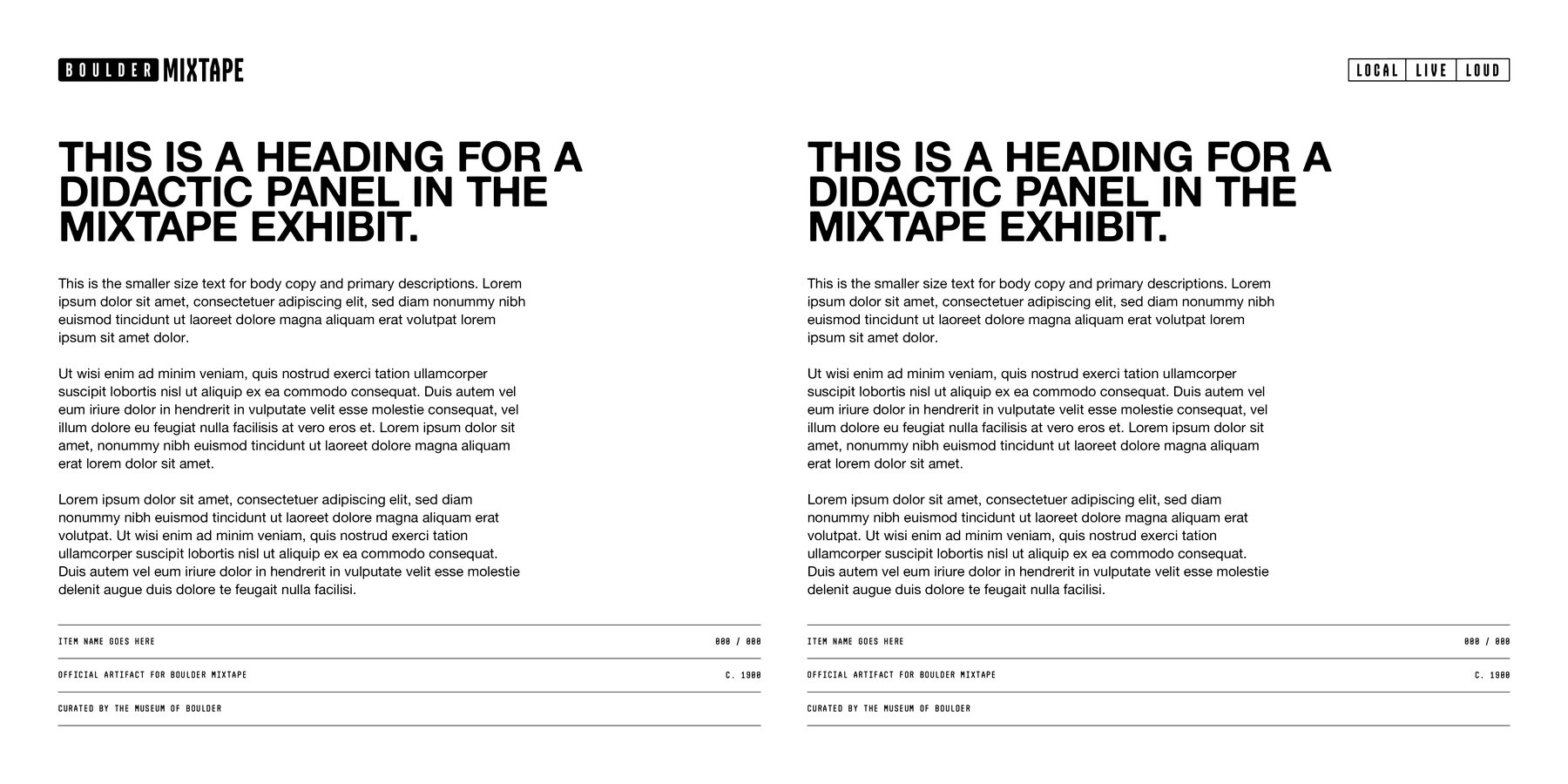
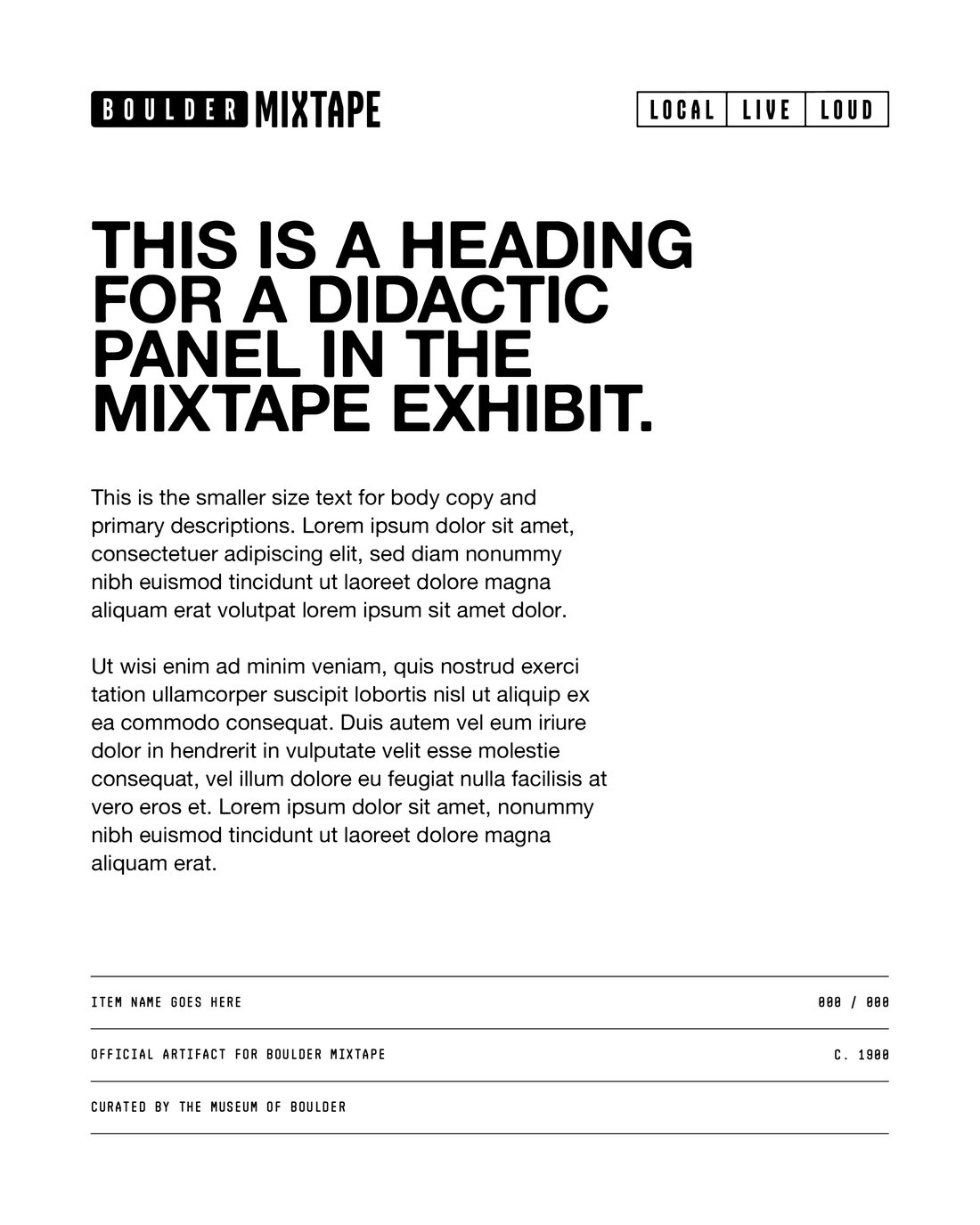
Panel format variations
The same grid, adapted to different proportions. The hierarchy stays consistent regardless of the shape.
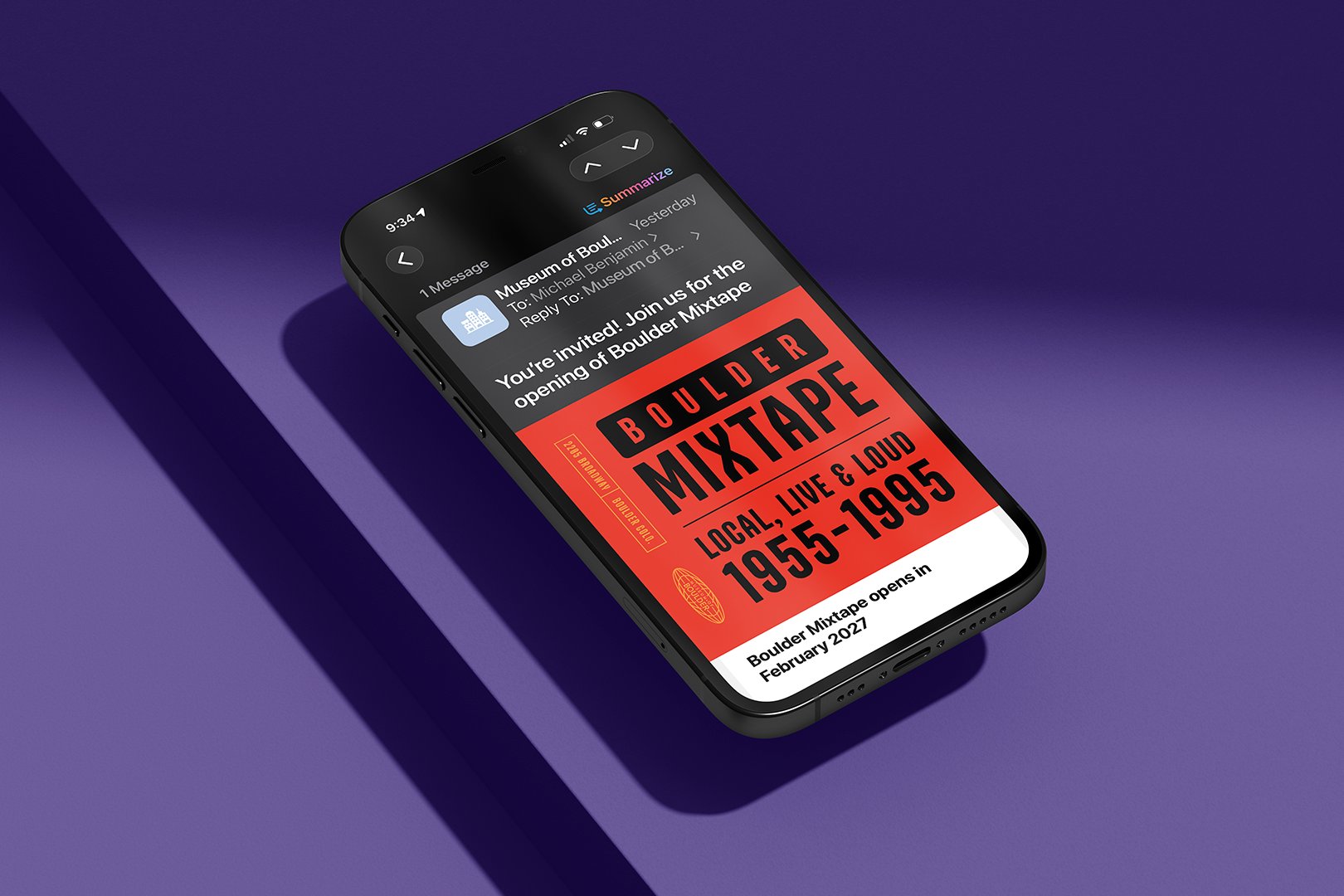
Digital advertising
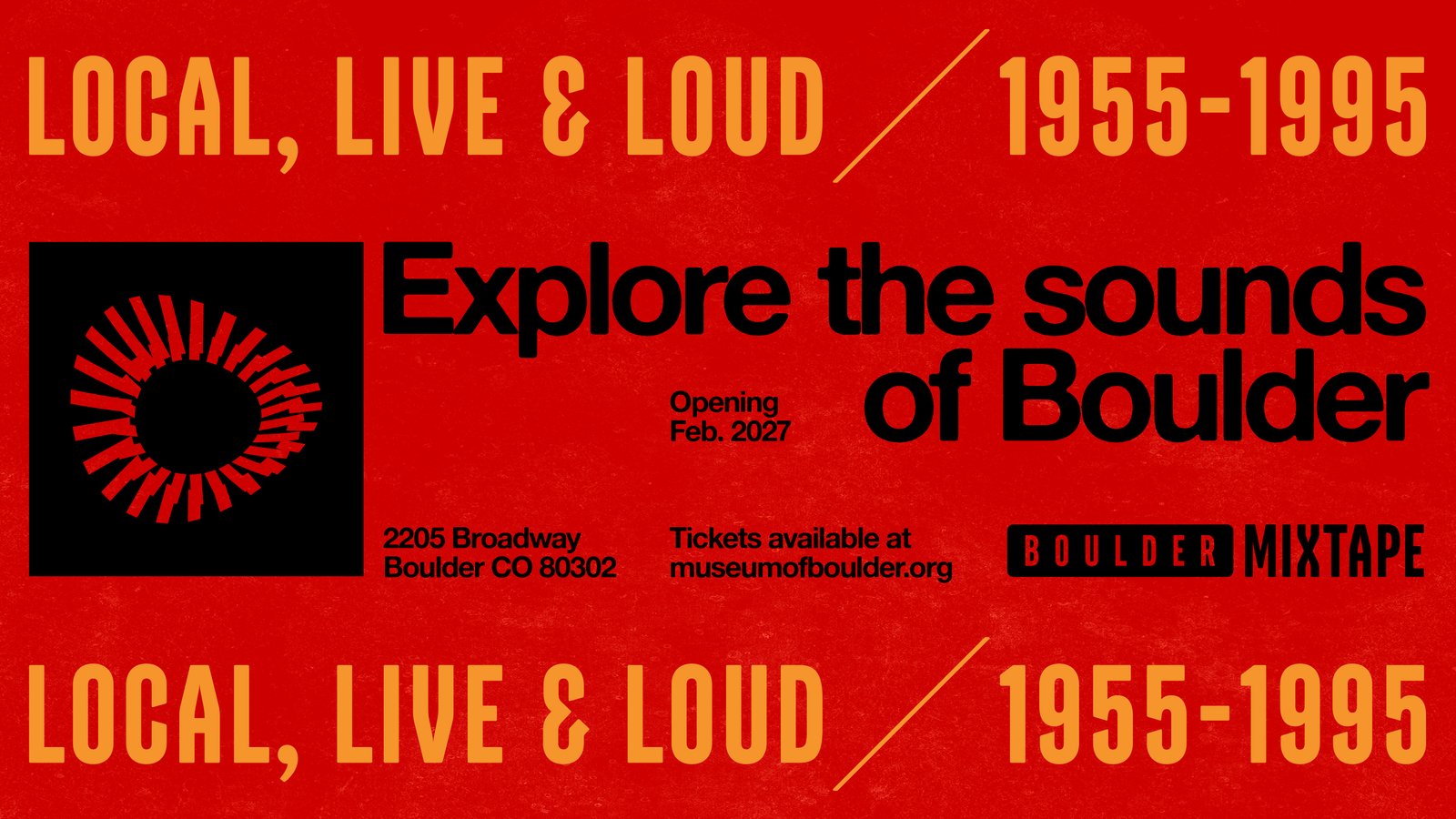
The CRM formats carry the same visual language into email and digital ads. Wide format shown here.
All CRM formats
Formatted for both wide screen and square placements.
Local, Live and Loud, to go
Shirts
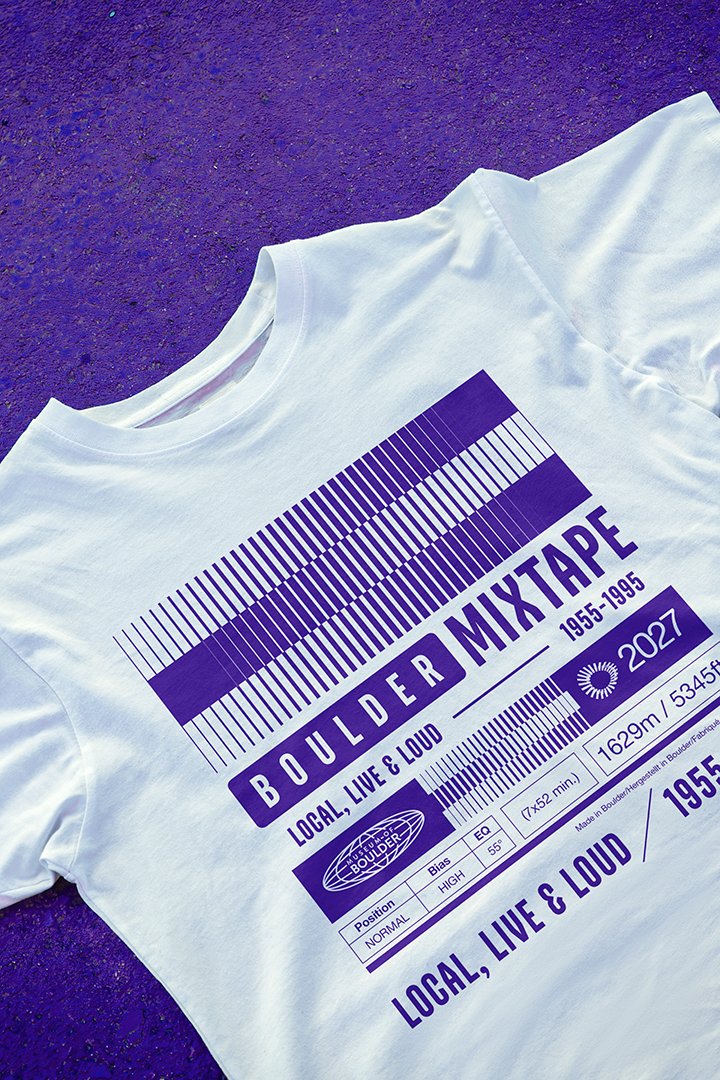
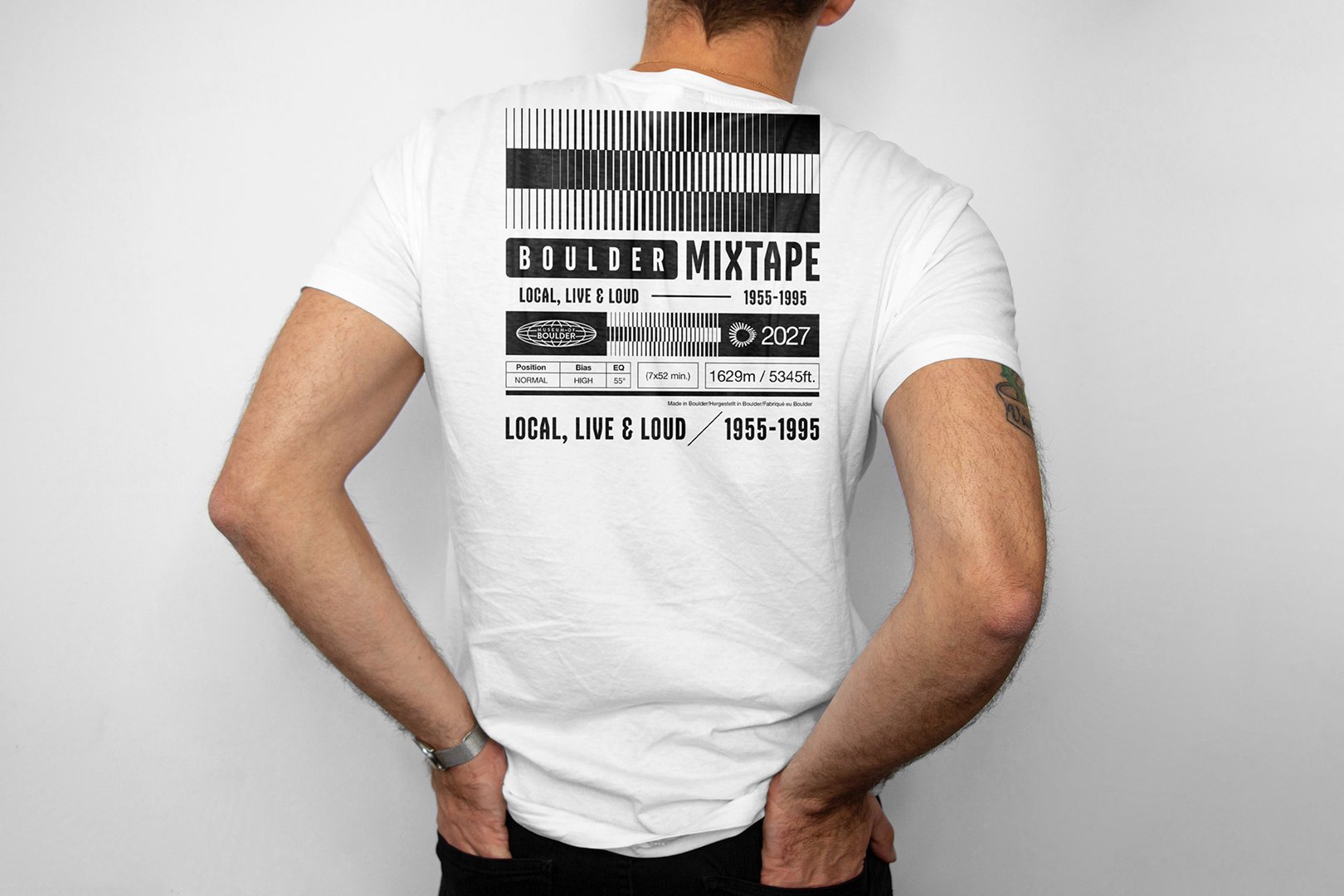
Putting the wordmark on a shirt turns visitors into walking signage and builds recognition for the exhibit. The look stands on its own, and the official Museum of Boulder logo can ride along as a secondary print on the back or a sleeve when an extra mark of officialness helps.
Hat
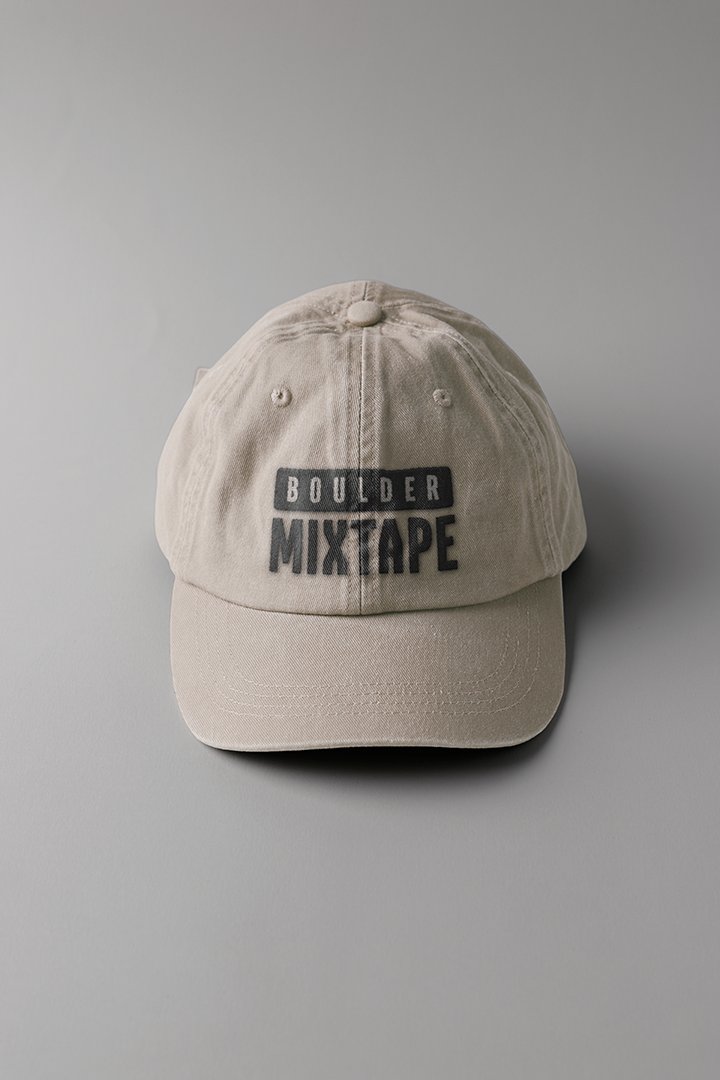
Accessories
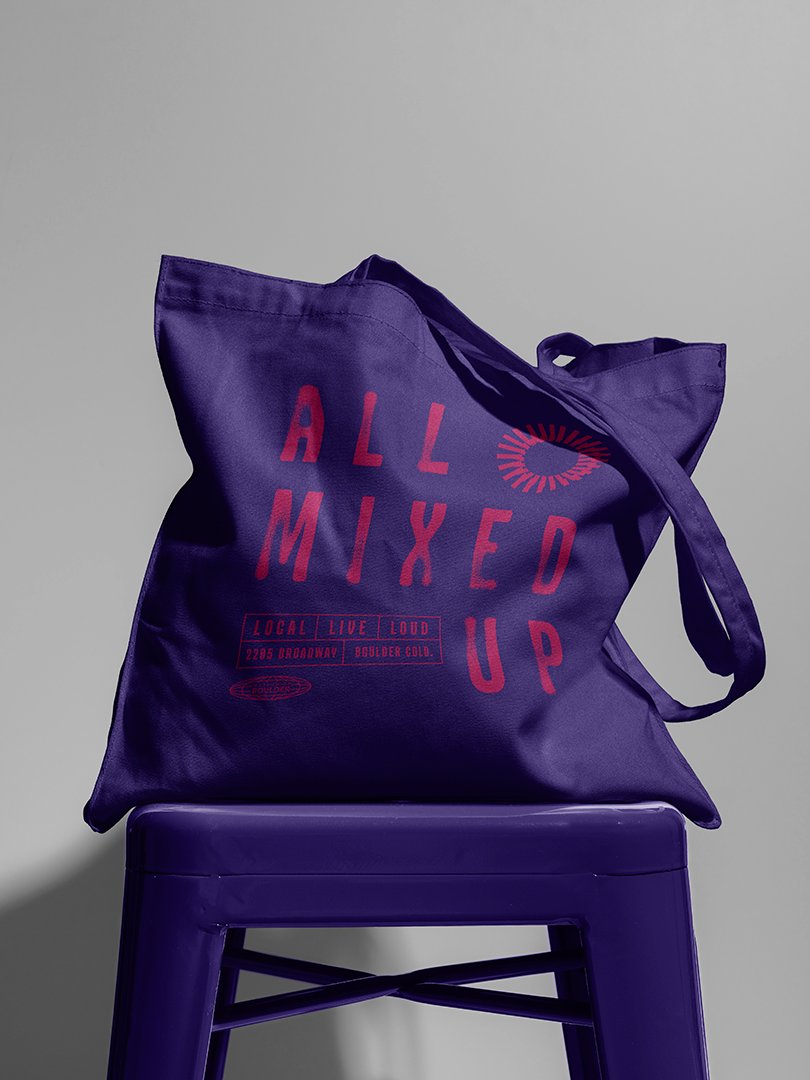
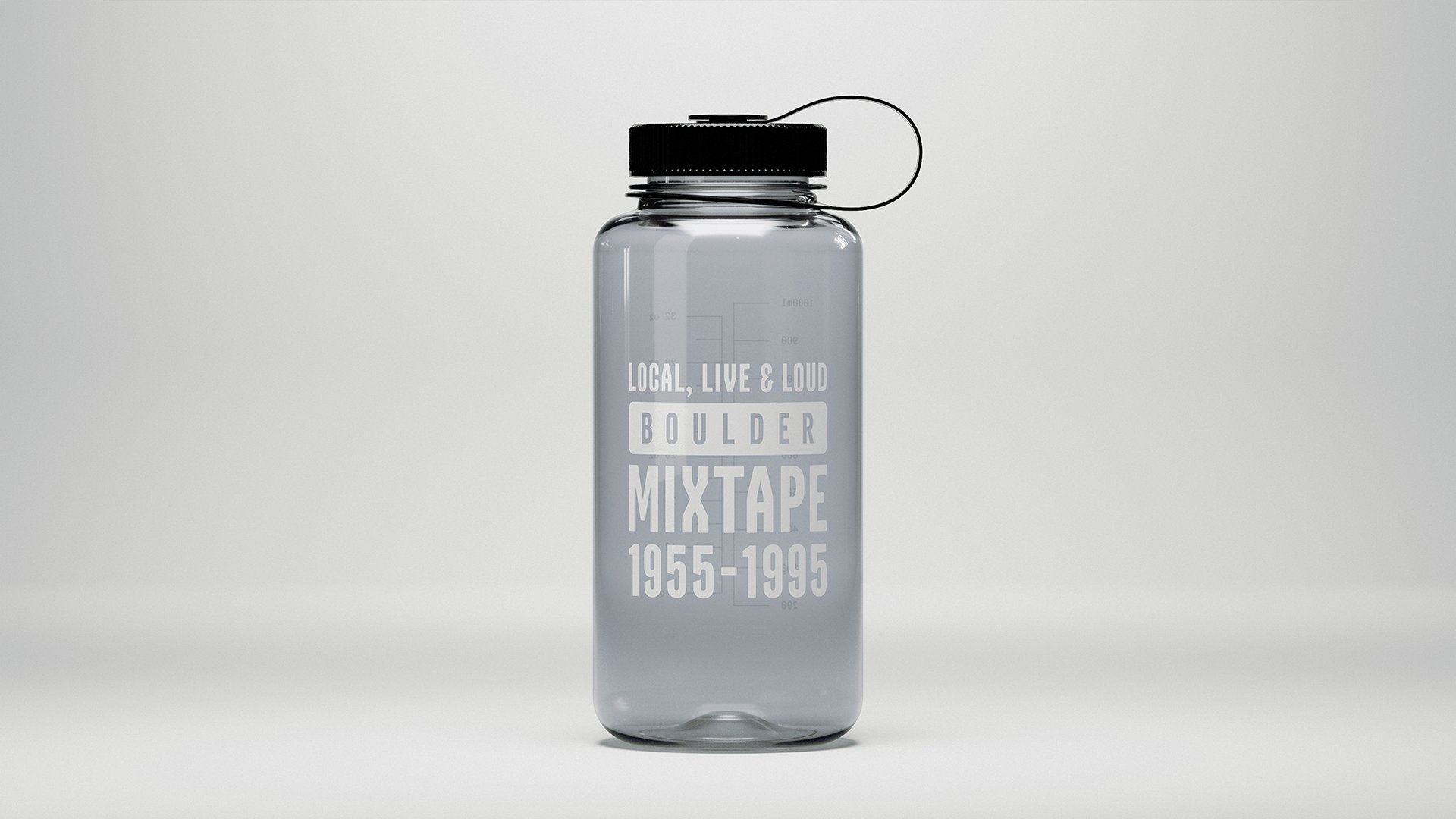
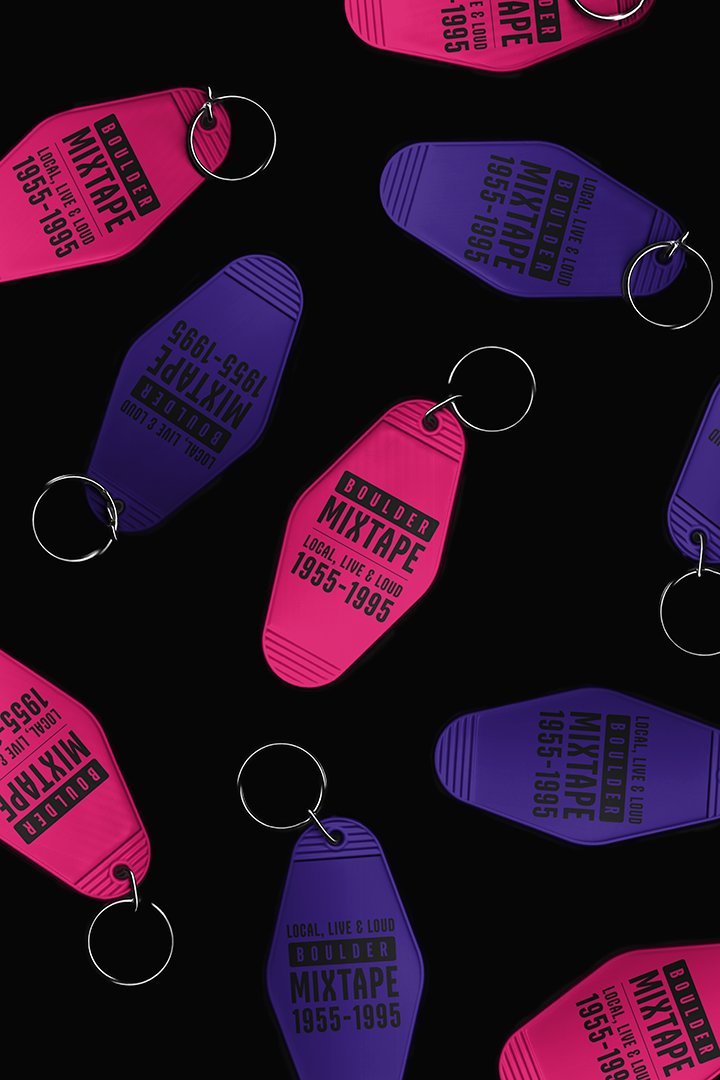
Reproducing the wordmark across the merch increases the visibility of the identity, so people remember it. The different logo iterations can also drop into other layouts for more expression, like the tote and the poster.
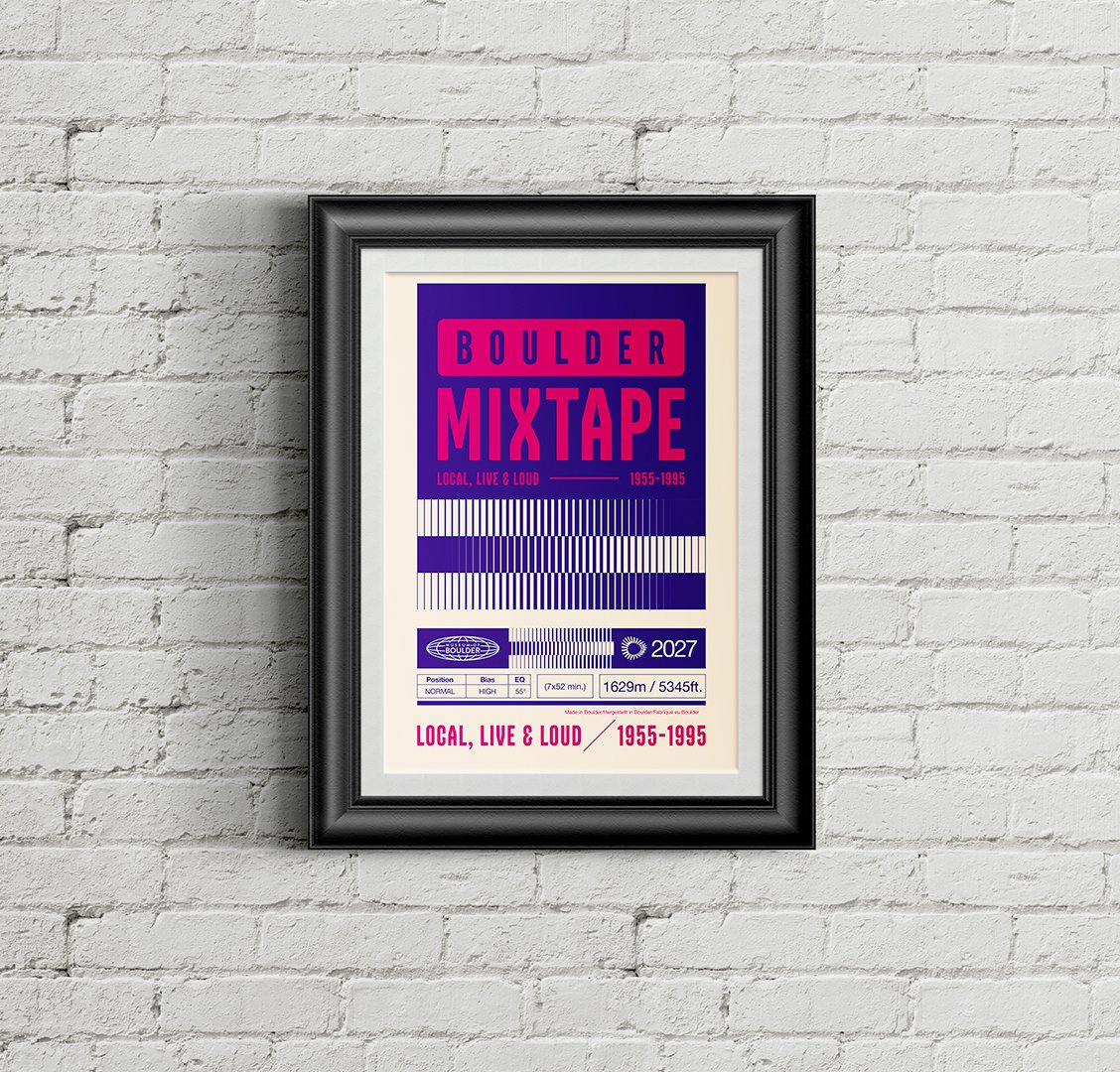
The system
Everything that makes up the Boulder Mixtape visual identity.
Color
The system starts with pure black and pure white. Red is the exhibit brand color, the one that carries Boulder Mixtape on its own. The rest are artwork accents pulled from the cassette and record packaging of the era, used across the applications. The Museum of Boulder's own purple and magenta run through everything as the shared brand colors that tie the exhibit back to the museum.
Typography
A grotesque sans serif in the tradition of album cover and packaging graphics. Used for headlines, the wordmark, and any large scale display text.
A mono-spaced typewriter face rooted in the liner notes and hand-labeled tapes of the period. Used for body text, captions, and object labels inside the exhibit.
A display face used sparingly for accents and moments of character, a nod to the era without taking over. Reserved for select headlines and graphic touches.
Image Treatment
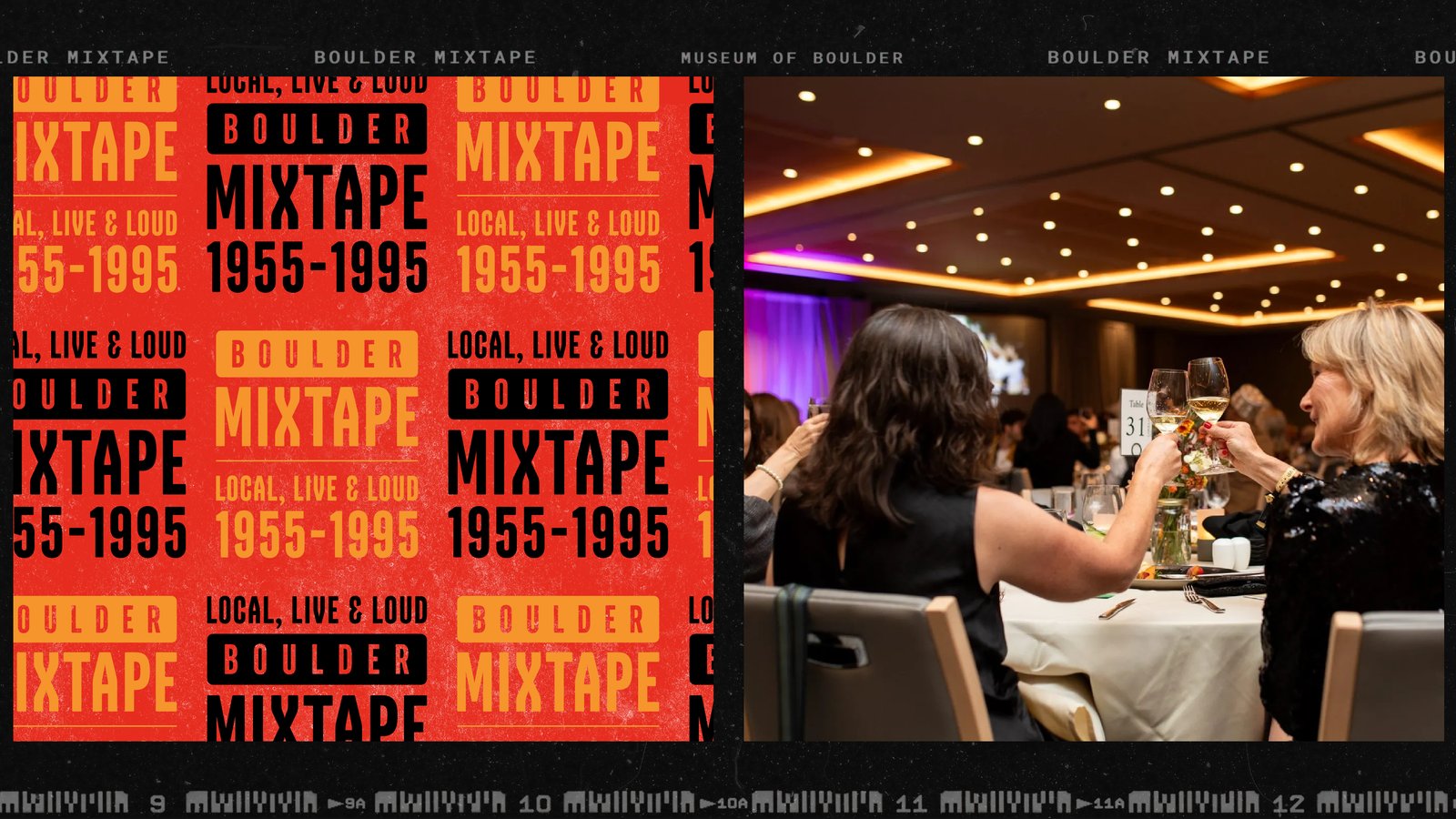
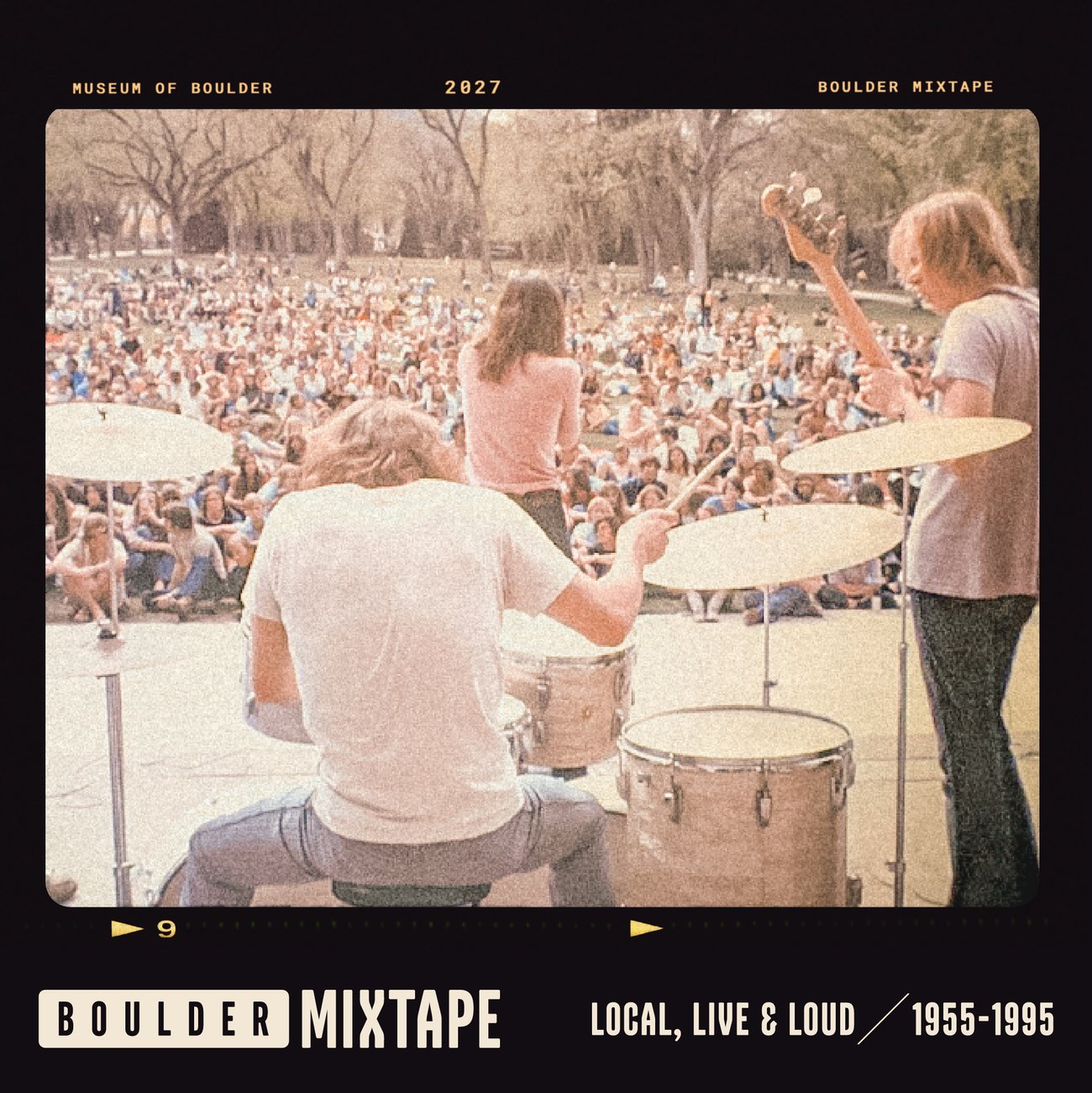
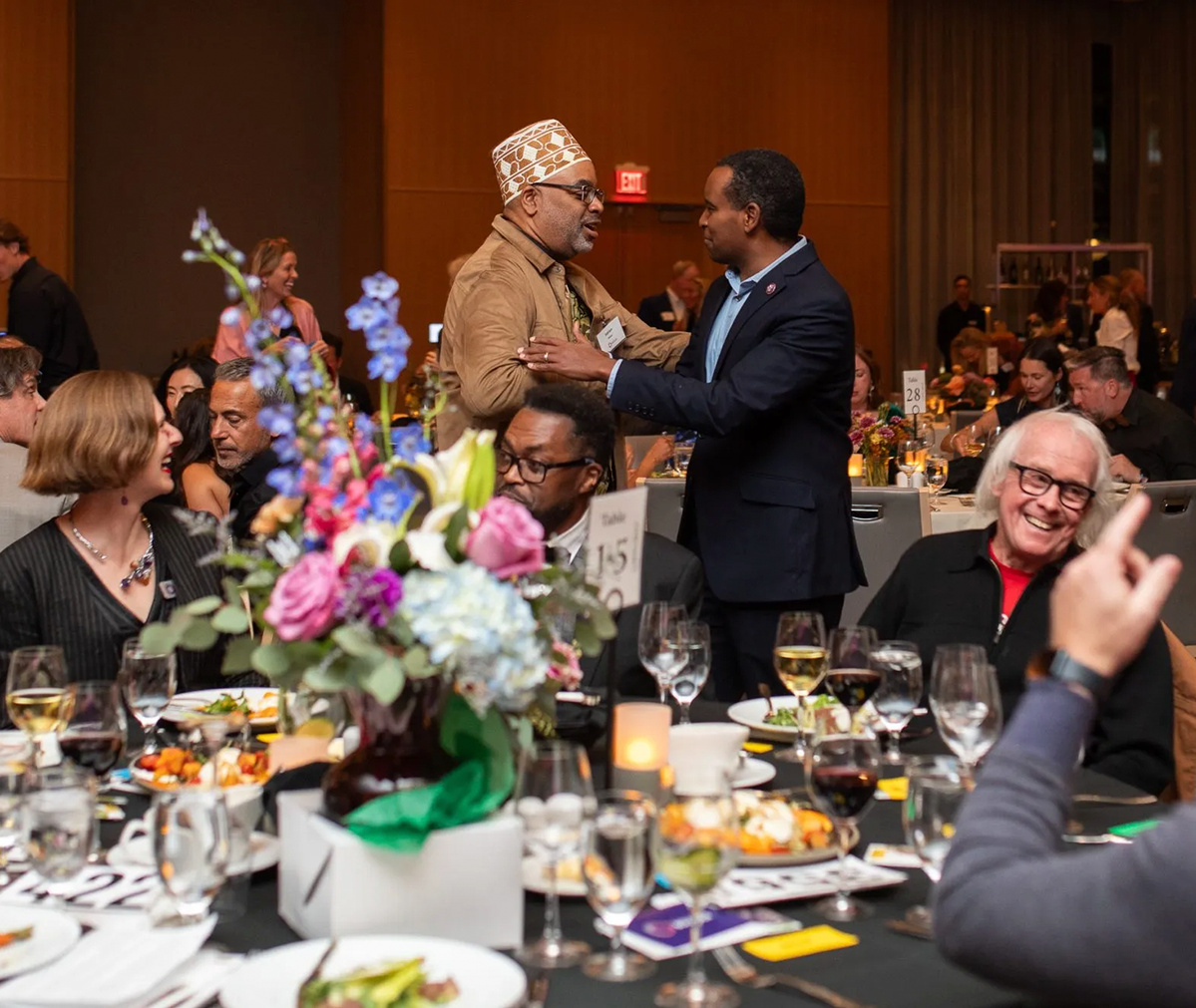
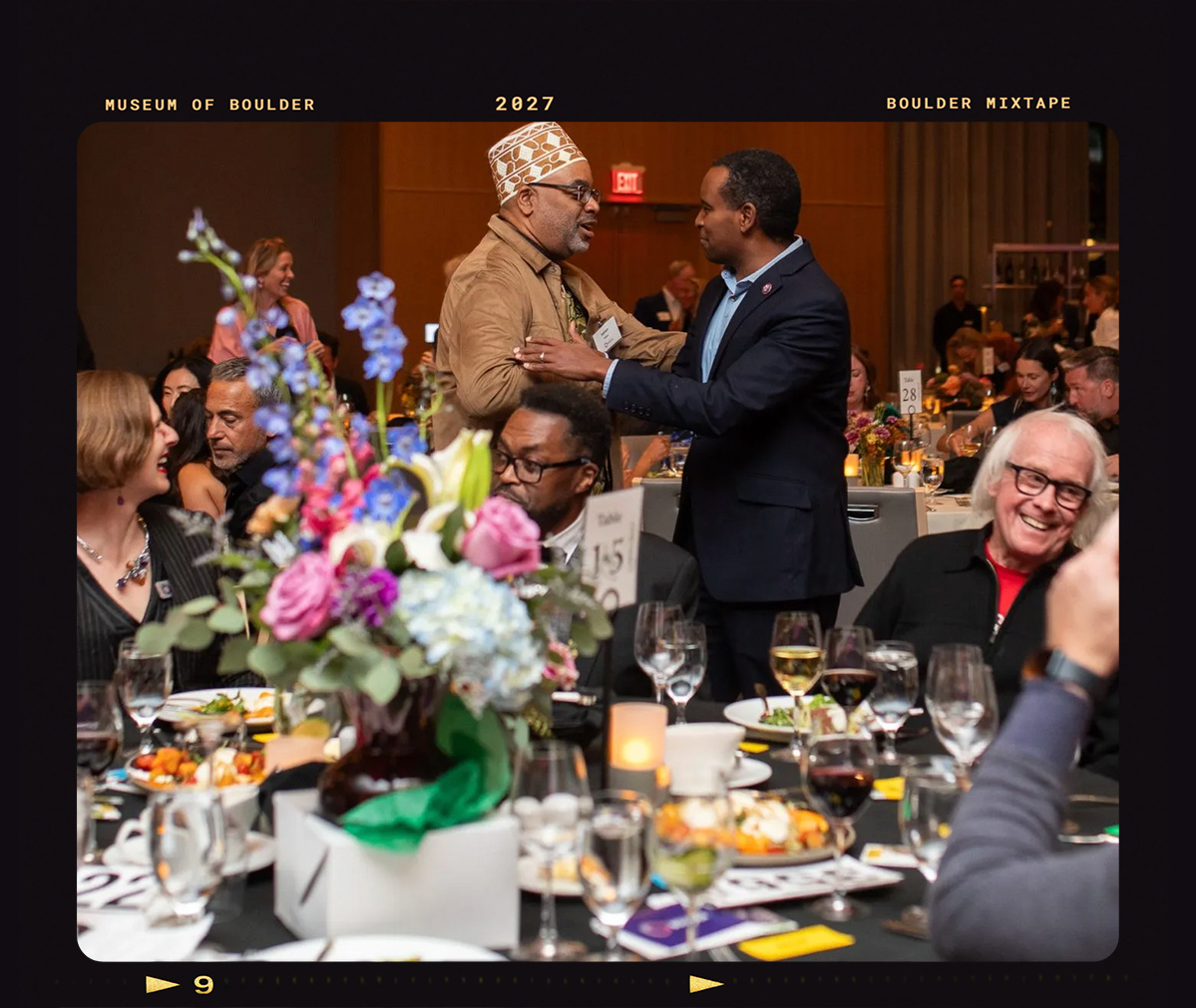
Marketing photography may be presented with dark film borders and analog contact sheet markings to ground it in the era. It's an option, not a rule, since not every photo needs it. This applies to marketing only and isn't a recommendation on how photography is presented inside the exhibit, which is the museum's call.
Logos and Lockups
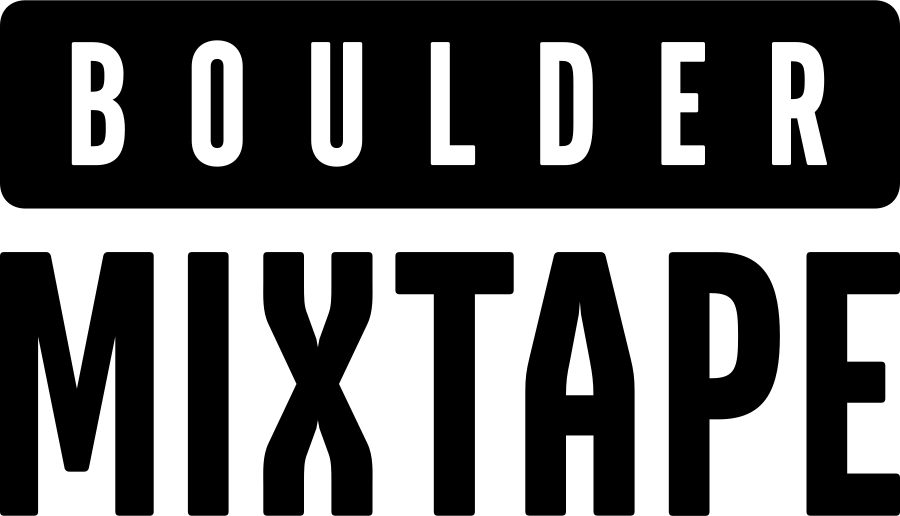
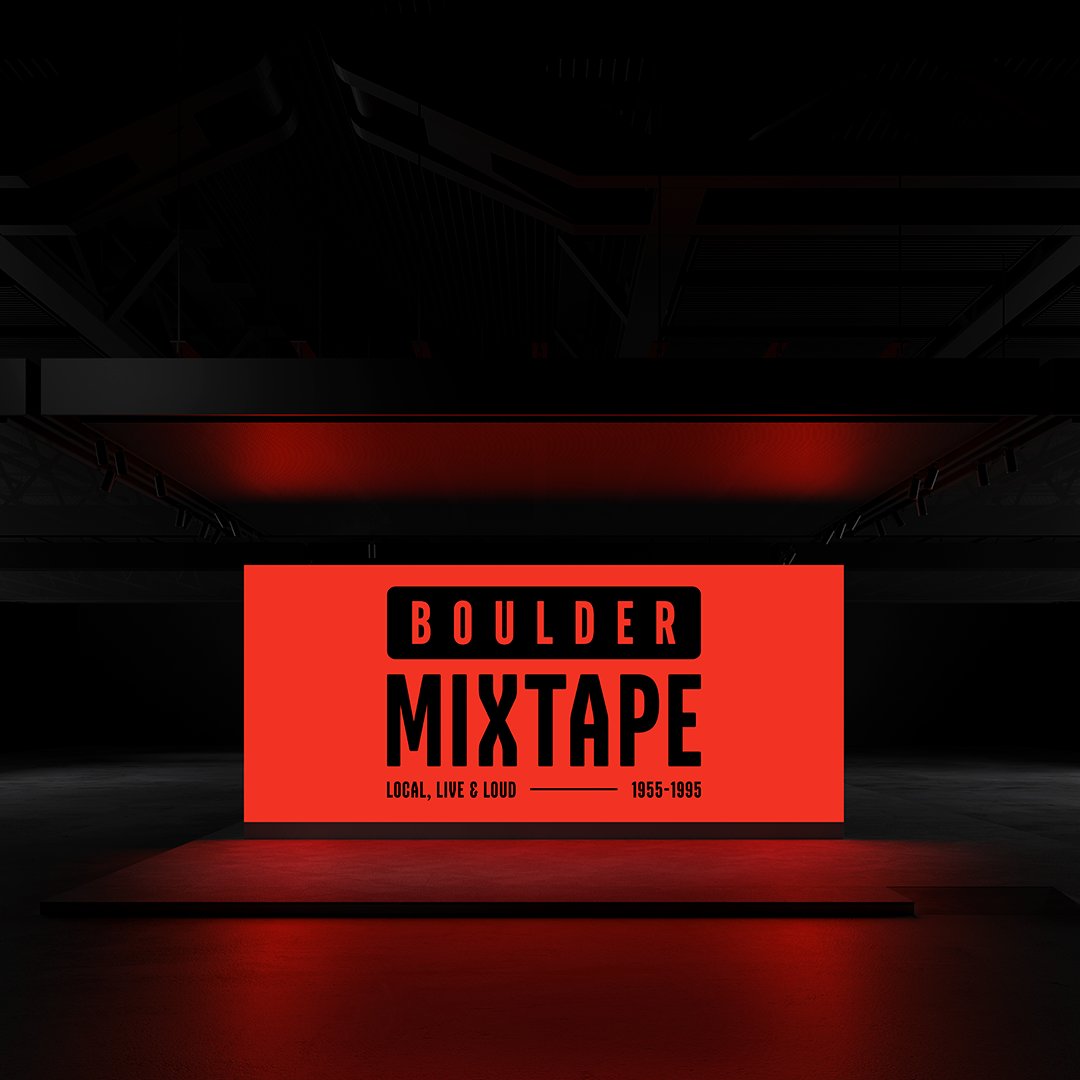
Every approved logo, shown positive and reversed, grouped by how it is used. The system works with or without the tagline and dates depending on context.
















Built for the feed
The social format uses the full identity system, color, type, and layout, sized for social posts rather than a square. It's designed to stop the scroll without losing the exhibit's character.
All social formats